
 Español

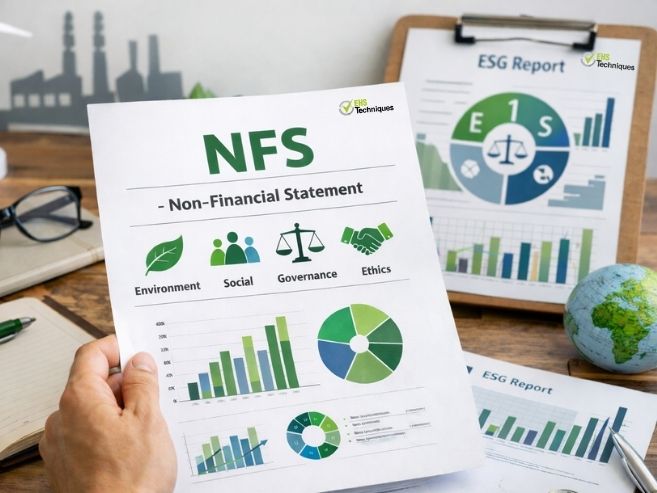
What is the EINF (Non-Financial Information Status)?
Non-financial information, known as EINF (Estado de Información No Financiera), has become a key pillar for corporate transparency and sustainability in Spain.
Since the entry into force of Law 11/2018, certain companies are required to report non-financial information related to environmental, social, labor, human rights and anti-corruption aspects.
This law remains the legal basis governing the development of EINF and includes, among others, information on:
- Environment
- Social and labour aspects
- Human rights
- Combating corruption and bribery
Beyond compliance, non-financial information has become a strategic element. Investors, clients and other stakeholders are increasingly demanding transparency, making EINF and ESG reports a key tool for improving corporate reputation and attracting investment.
Why is it important to develop an EINF?
Regulatory compliance
Failure to draw up the EINF may entail financial penalties and legal risks. In addition, with the advent of the CSRD Directive and ESRS standards, reporting requirements will be progressively more stringent, detailed and comparable.
Transparency and trust
The EINF allows companies to show how they manage environmental, social and governance (ESG) aspects, generating trust between:
- Investors, who are looking for responsible and resilient companies.
- Customers, increasingly sensitive to sustainability.
- Society, which demands a real ethical commitment.
Competitive advantage
Companies that report their non-financial information correctly:
- They improve their reputation.
- Access green finance and ESG funds.
- They differ in markets where sustainability is a key value.
Risk management
The EINF helps to identify and anticipate non-financial risks such as climate change, human rights or corruption that can affect long-term business stability and value.
Preparation for the future
European regulations (CSRD and ESRS) require more comprehensive reporting, incorporating the double materiality approach (impacts, risks and opportunities). Having a strong EINF today facilitates the transition to these new requirements.
What steps should be taken to develop an EINF?
In order to comply with the regulations and take advantage of the opportunities offered by EINF, companies must:
1.- Strengthen internal ESG data collection and validation systems, evaluating the use of technological tools that facilitate and automate reporting.
2.- Integrate sustainability in the corporate strategy, beyond formal compliance.
3.- Plan external verification of the EINF by an independent auditor.
What are the competitive advantages for a company?
The EINF in Spain is evolving towards a more demanding model aligned with Europe. The CSRD and ESRS represent a profound change: companies move from fulfilling a legal obligation to strategically managing their sustainability.
Organizations that adapt quickly will not only comply with regulations, but also gain a competitive advantage in an increasingly socially and environmentally responsible marketplace.
Today, non-financial reporting is no longer just a legal requirement but a strategic tool to attract investment, strengthen reputation and build trust.
Why choose EHS Techniques as a sustainability and climate change consultant?
- More than 10 years of expertise working with large and medium-sized enterprises in sectors such as energy, food or tourism.
- Ability to offer specific and tailored solutions for each organisation.
- Real integration into customer teams, working as part of the company.
- A human team with high technical expertise and practical vision.
The EHS Techniques team guarantees a close and flexible service, adapted to each client’s needs, combining technical rigor with the implementation of advanced solutions at reasonable costs.
Contact with our professional team.
International experience
We have the international experience to continue offering this service to continue offering this service anywhere in the world.