Español

LDAR
We are the Spanish company with the most experience in LDAR services, ISO 17025 certified since 2014.
We are the most experienced company in Spain in the implementation of LDAR projects and ENAC 17020 certified since 2014.
At EHS Techniques we have worked on more than 13,000 km of the natural gas transportation and distribution network, 7 regasification plants, 3 subway storage facilities and 18 compressor stations, as well as 4 refineries and 5 petrochemical plants.
In addition, we have a consolidated and highly specialized team dedicated to the control of fugitive emissions in the Oil & Gas sector and other intensive industries. Our ENAC accredited laboratory, under ISO/IEC 17025:2017, uses the EN-15446 standard to ensure VOC and methane measurements with the highest standards of quality and accuracy. In addition, our methodologies also allow estimating greenhouse gas(GHG) emissions from leaks.
What do we offer at LDAR?
- LDAR and SMART LDAR programs (OGI + Q-OGI)
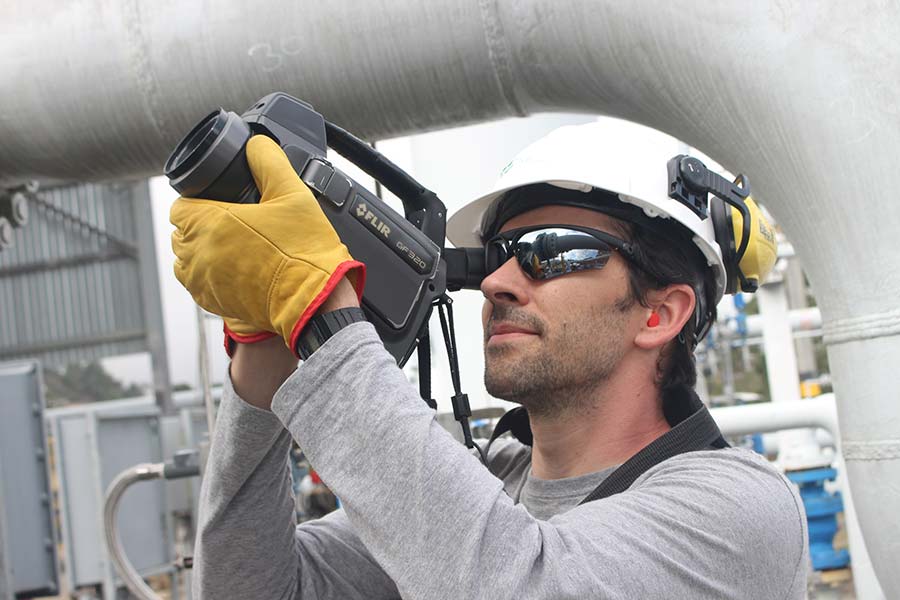
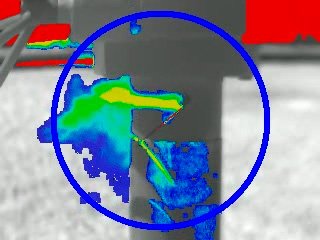
We apply the best available technologies for intelligent leak detection and quantification: OGI infrared cameras, High Flow Sampler type measurement tools, QL320, and other advanced techniques. We select the methodology that best suits your installation, ensuring the best cost-effective strategy. - Fugitive emissions inventories and monitoring
We perform inventory studies in accordance with US EPA M21 standard, as well as direct estimates or estimates based on specific correlations. We develop custom correlation factors for individual clients, allowing for more accurate estimation of fugitive emissions, including methane. - Accreditation and applied regulations
We abide by internationally recognized standards: the ISO/IEC 17025:2017 accreditation for laboratories and the EN-15446 procedure. We also work under reporting protocols such as OGMP for methane emissions. Our studies comply with national and international regulatory requirements, including the European Methane Emission Reduction Regulation. - Specialized training
We offer specific lectures and training for plant, administrative, maintenance and operational personnel so that your team can recognize leakage problems, use OGI/QL/High Flow technologies, interpret results, and implement prevention practices . - State-of-the-art technology and internationalization
Research and testing under controlled conditions allow us to be always up to date with emerging technologies, whether we are detecting in natural gas, hydrogen (blended or pure) installations, or in demanding environments. In addition, we ensure that we can operate anywhere in the world, adapting to the local regulatory framework and international standards.
Advantages of working with EHS Techniques at LDAR
- Maximum accuracy and reliability in leak detection that minimizes losses, pollutant emissions and operating costs.
- Reduced environmental footprint by identifying and correcting fugitive emissions, thus contributing to sustainability goals and GHG reductions.
- Rigorous regulatory compliance, thanks to ISO 17025 certification and recognized standards (EN-15446, OGMP, European Regulation, EPA protocols).
- Cost-effectiveness: by optimizing the resources dedicated to emissions control and choosing efficient technologies, we reduce efforts and costs for our customers.
- Reputational improvement: companies that actively control their emissions, especially in critical sectors, gain confidence with employees, authorities, local communities, customers and investors.
If your company needs a serious, certified, technically robust and adaptable LDAR service, contact us. At EHS Techniques we offer you the technical support, certification and expertise to detect leaks, quantify emissions and design efficient and reliable mitigation strategies.
LDAR – Frequently Asked Questions
It is a system for detection and repair of VOC and methane leaks that allows industrial facilities to quantify them and minimize them over time.
The technologies are very varied and different depending on whether we are talking about detection (photoionization, catalytic sensors, infrared, laser, etc.) or quantification (high Flow sampler, AMDL, DIAL, etc.) as well as specific software for the interpretation and management of results (QOGI, powerBI, etc.).
At the European level, a specific Regulation for the reduction of methane emissions was published in 2025, especially aimed at the natural gas production, transport, storage and distribution sector. There are also specific requirements derived from the application of Best Available Techniques in installations affected by the Industrial Emissions Directive.
EHS Techniques can be your advisor in the process of implementing and executing these programs, as well as reporting on the associated requirements.
These programs allow for preventive work to reduce product wastage at the facilities, as well as to reduce overall emissions of both VOCs and methane.
We provide specific programs for the implementation of the specific programs for each facility, as well as the management and calibration of your detection and quantification equipment.
.

Raul Oliveira
raul.oliveira@ehstechniques.com
Case Studies
Looking for an LDAR program that improves your compliance and reduces operating costs?
Our team accompanies the whole process: initial diagnosis, leak detection, prioritisation of interventions and follow-up of repairs to ensure measurable results.
Tell us about your facilities and we will show you how to optimize the management of fugitive emissions in an efficient and sustainable way.