
 Español


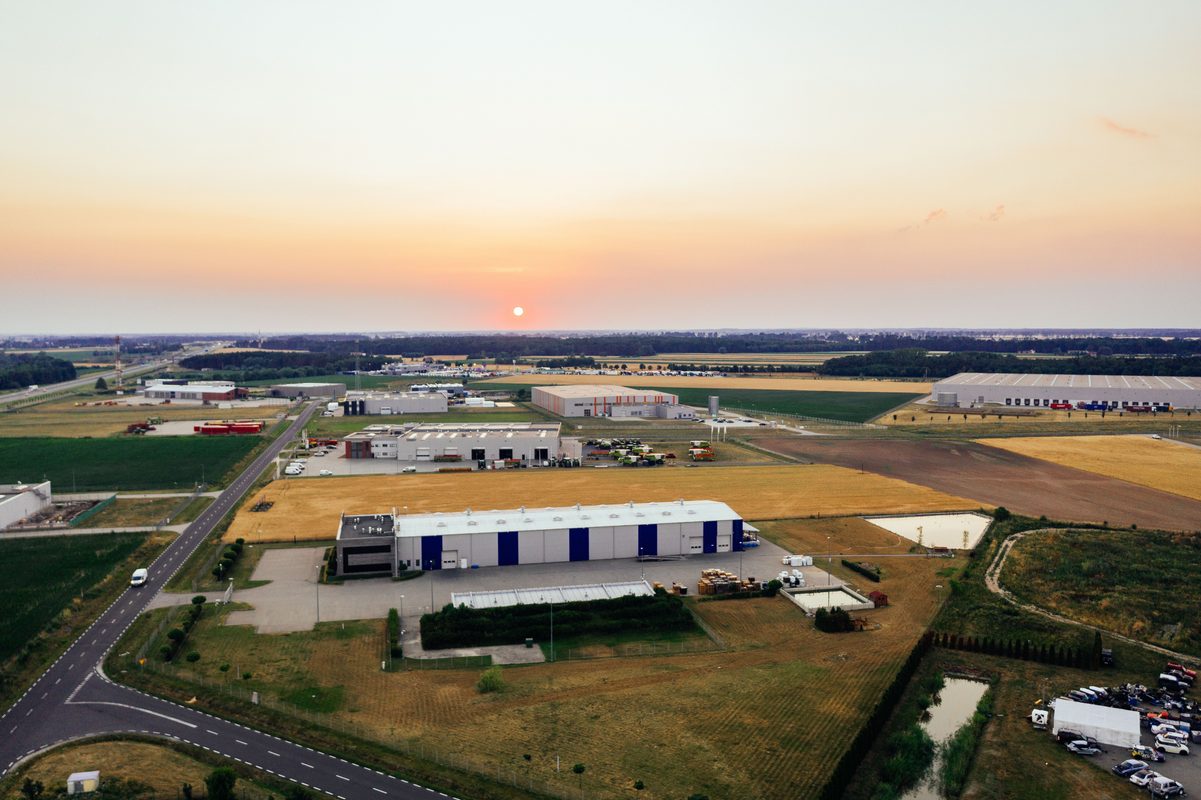
Every message we send, every mobile payment, or every query to an artificial intelligence tool goes through a data center. It is an industrial infrastructure that concentrates servers, storage systems, and communication networks, operating without pause 24 hours a day. To function, it consumes electricity, requires a network connection and cooling systems, and in many cases, this translates into a demand for resources such as water and land.
Our dependence is real: hospitals, banking, e-government, online commerce, transport, or connected industry rely on data centers. Therefore, the question is no longer whether we need them, but where, how, and under what conditions they are deployed.
Why society rejects Data Centers
Social unrest is not due to an opposition to technology itself. It responds directly to how these projects are being deployed in the territory, through fairly consistent axes of conflict:
- Water and energy demand in territories exposed to drought or with saturated power grids: the extraction of critical resources creates a perception of direct competition with the needs of the local population and traditional productive sectors.
- Occupation of large areas of land and modification of the landscape: the deployment of these infrastructures causes direct impacts on agricultural areas, irreversibly transforming the natural and semi-urban environment.
- Limited local return: a sharp contrast between the high demand for resources and the low generation of stable employment (as shown by one of the cases in Aragon in 2021, where each of the three operational data centers did not exceed twenty direct employees).
Lack of transparency and participation: an increase in public unrest due to the scarcity of information and the fast-tracking of project approvals.
Geographical concentration amplifies this friction. Although the map of the Spanish Data Center Observatory shows that the infrastructure is heavily centralized in terms of numbers in the Community of Madrid (with 80 facilities) and Catalonia (with 50), the scale of new hyperscale developments distributes the pressure: Aragon accounts for 70% of the investment announced in Spain between 2019 and 2025. In this latter region alone, technical estimates indicate that consumption for cooling will exceed 755,000 cubic meters of water per year.
Neighborhood platforms and ongoing grievances
The public response is already organized and is becoming increasingly sophisticated:
- “Tu Nube Seca Mi Río” (Your Cloud Dries My River) was born as a reaction to a data center project in Talavera de la Reina and has since expanded to other data centers across Spain.
- In Aragon, the campaign “No es sequía, es saqueo” (It’s not drought, it’s looting) brings together collectives opposed to the deployment of data centers, and the first civil society lawsuit against a data center in Spain has been filed.
- En Huesca, el pueblo de Cuarte celebró la primera consulta vecinal de Aragón sobre un centro de datos: participó el 81 % del censo y el 99,1 % votó en contra del proyecto de un operador hiperescalar. La consulta no es vinculante y el censo es reducido (144 personas) , pero muestra una capacidad de movilización que ningún promotor debería ignorar. En ese mismo caso, la compañía llegó a un acuerdo para financiar infraestructuras de abastecimiento de agua para el municipio y otras poblaciones, una muestra de que el diálogo con el territorio es posible.
In Huesca, the village of Cuarte held the first neighborhood consultation in Aragon regarding a data center: 81% of the census participated, and 99.1% voted against the project of a hyperscale operator. The consultation is non-binding and the census is small (144 people), but it shows a capacity for mobilization that no developer should ignore. In that same case, the company reached an agreement to finance water supply infrastructure for the municipality and other towns, a sign that dialogue with the territory is possible.
There are also examples of how social pressure changes decisions: a large operator has renounced requesting compulsory purchases in Aragon following the social and environmental rejection of its project.
The Royal Decree: a new framework for the sector
The Government is urgently processing a Royal Decree on energy and environmental sustainability, resilience, and digital sovereignty requirements for data centers, which develops Royal Decree-Law 7/2026. According to the draft, it would apply to centers with an access power equal to or greater than 1 MW that connect to the grid after the RD comes into force, and it would require backing at least 80% of energy consumption with new renewable generation on an hourly basis.
The context is clear: MITECO estimates that 12 GW of grid access has already been granted since 2021, compared to an expected demand of 3.5–4 GW. The text is currently before the Council of State, a step prior to its approval by the Council of Ministers, and the sector and regulatory bodies have requested adjustments. Regardless of its final version, the underlying message is that sustainability is becoming a condition for grid access.
How to anticipate social impact from the design stage
Complying with the regulation does not guarantee the acceptance of the territory. A technically flawless project can end up paralyzed through social or legal channels. Therefore, from the very beginning, we recommend:
- Mapping the territory and stakeholders before deciding on the location.
- Assessing social risks alongside environmental and safety risks.
- Designing to reduce impact: low-water-consumption cooling, waste heat recovery, and acoustic and landscape studies right from the preliminary project stage.
- Building the social license to operate through clear information, early participation, and local benefits defined with the community.
- Conducting continuous monitoring during construction and operation.
Anticipating risks reduces conflicts, delays, and costs, and generates the trust that a project of this scale needs.
Conclusion
Data centers are essential, but they cannot be deployed by turning a blind eye to those living next to them. Integrating social impact from the early stages does not hold back investment: it makes it viable and sustainable.
Are you planning a data center? Let’s talk about how to anticipate its social impact from day one.