
 Español

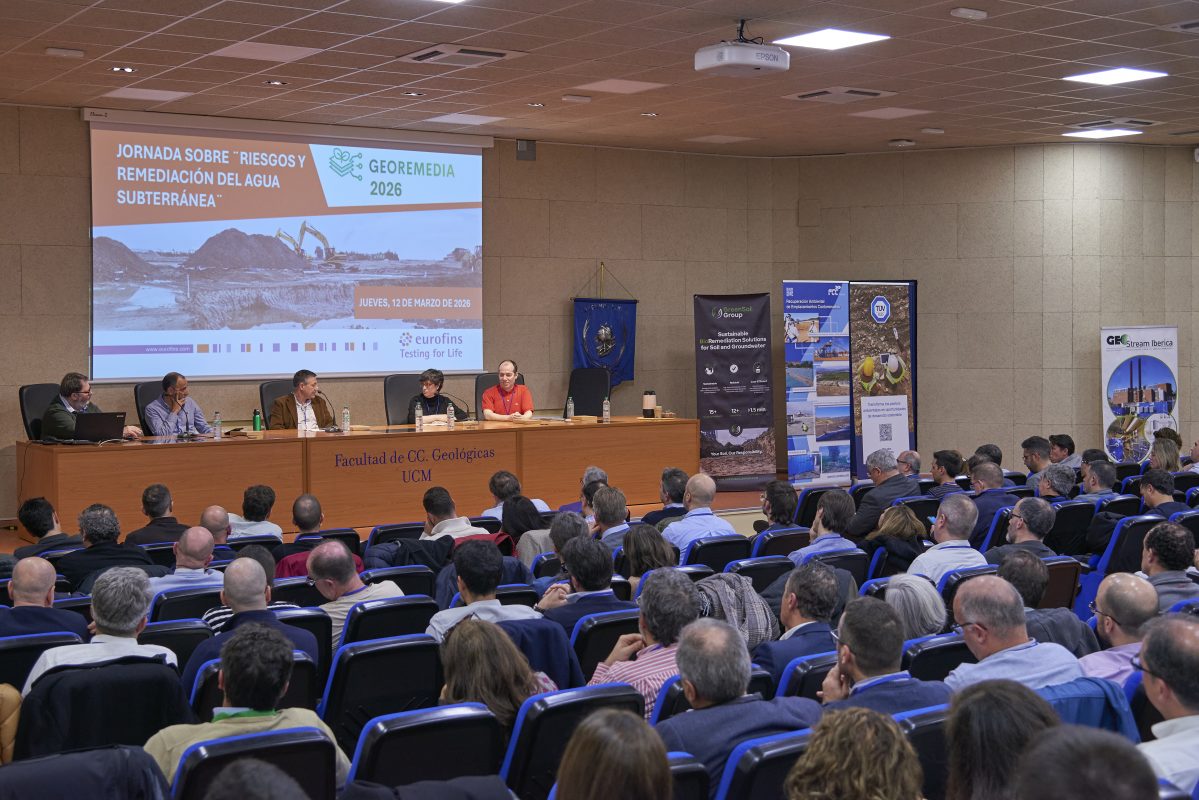
Last Thursday, 12 March, saw the third edition of GeoRemedia, a technical conference attended by various stakeholders in the contaminated soil and associated groundwater sector. Representatives from various government bodies, at both national and regional levels, as well as from the environmental consultancy sector, remediation companies, drilling firms and laboratories, gathered for a day of discussions in the lecture hall of the Faculty of Geological Sciences at the Complutense University of Madrid.
Translated with DeepL.com (free version)
EHS Techniques played an active role in organising the conference, as well as in its delivery
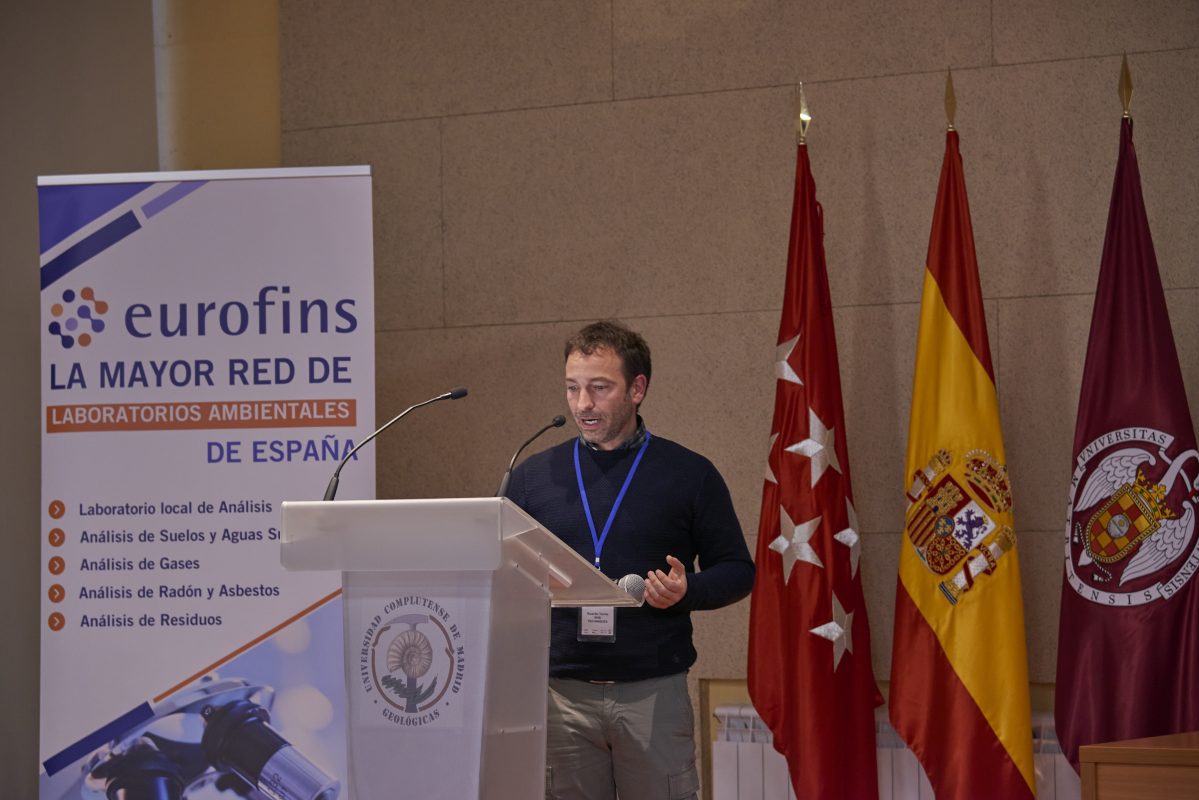
Ricardo Torres, Project Manager and lead on several ongoing subsoil research and remediation projects, gave a presentation on the use of artificial intelligence in subsoil characterisation and risk management projects, emphasising the human factor and the sensible use of this emerging tool.
For his part, Luis Molinelli, Technical Director, acted as moderator for one of the two panel discussions held during the conference. This panel discussion focused on contaminated soil (the other focused on groundwater) and featured technical experts on contaminated soil from Andalusia, Catalonia, Madrid and the Basque Country.
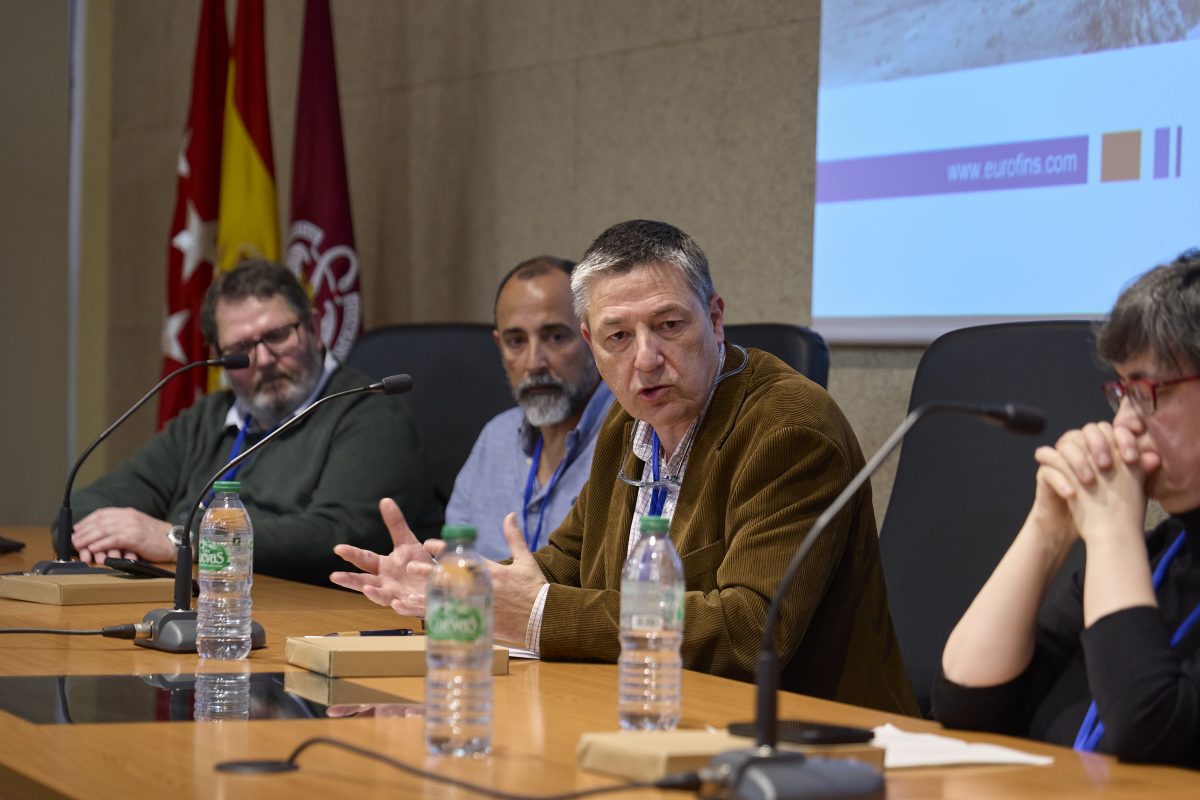
Other representatives from the government included officials from the Ministry for Ecological Transition and Demographic Challenge, ENAC, the Catalan Water Agency and the Ebro River Basin Authority,
Around 200 people attended, which was the capacity of the auditorium where the event was held, although in the weeks leading up to it, invitations had to be limited because many more people had expressed a wish to attend.
Technical conclusions: Regulations on contaminated water and soil
Alongside the presentations given by the various organisers, the panel discussions were of particular interest, as they provided an opportunity to publicly discuss some of the sector’s concerns.
Thus, during the round-table discussion on groundwater, it was confirmed once again that the status of ‘Entity Collaborating with the Water Authority’ (ECAH) cannot be required by the river basin authorities until March 2027.
Another point of interest, raised in private discussions with the relevant officials. This is because the Ebro and Tagus river basin authorities have indicated that they apply the generic reference values set out in Royal Decree 665/2023, and do not apply those published in the past (those for the Ebro were never officially published, and those for the Tagus were included in Royal Decree 35/2023).
Meanwhile, the round table on contaminated soil, moderated by EHS Techniques, addressed topics of great interest, such as the approach to PFAS, the Ministry’s forthcoming publication of a guide to quantitative risk analysis, and the plans of the various autonomous communities for the near future. In this context, it is worth noting that the representative from Andalusia doubled down on his commitment to using PPRTVs over TPHCWG to assess the toxicity of TPHs in ACRs, and that the representative from the Basque Country mentioned the forthcoming call for a tender to study different ACR models, having declared the use of RBCA software to be ‘obsolete’.
All in all, it was a highly engaging event, in which EHS Techniques played a very active role and which was extremely well received. More to come next year.
Why choose EHS Techniques as your environmental consultant?
- More than 10 years of expertise working with large and medium-sized enterprises in sectors such as energy, food or tourism.
- Ability to offer specific and tailored solutions for each organisation.
- Real integration into customer teams, working as part of the company.
- A human team with high technical expertise and practical vision.
The EHS Techniques team guarantees a close and flexible service, adapted to each client’s needs, combining technical rigor with the implementation of advanced solutions at reasonable costs.
Contact our team of professionals.
International experience
We have the international experience to continue offering this service to continue offering this service anywhere in the world.