Español

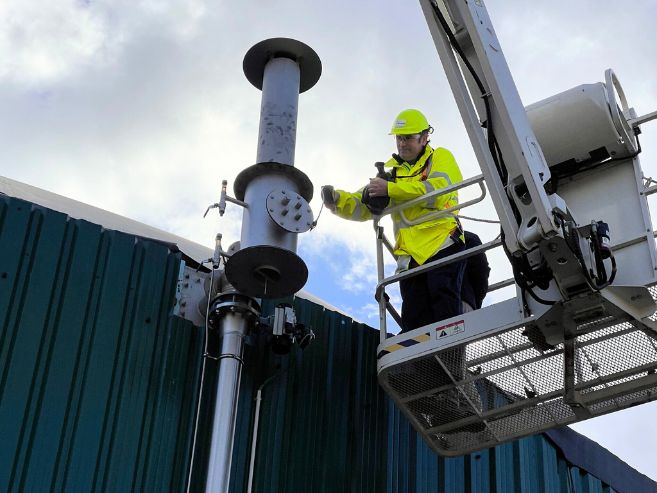
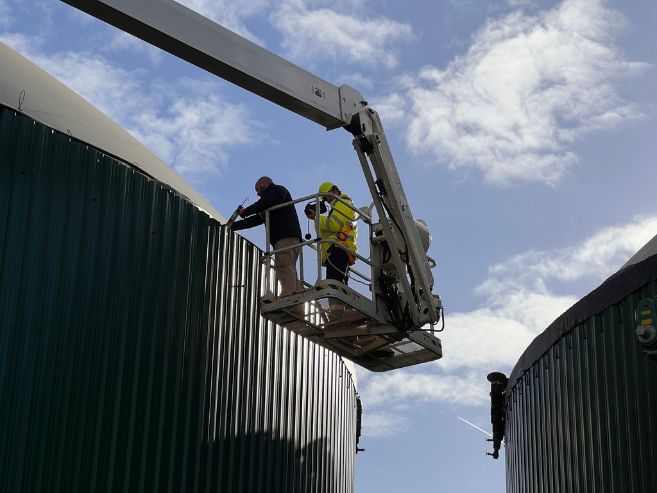
The EHS Techniques team has conducted an LDAR campaign in a biomethane plant operated in Spain under real operating conditions to evaluate the plant’s performance, identify fugitive emissions and analyze its environmental impacts, safety and odor generation.
Objective of the LDAR tests
The main objective of the tests was to verify the tightness of equipment, process lines and storage facilities and to detect fugitive emissions of methane and other associated compounds. This campaign has been the initial follow-up to the commissioning of facilities and has also served to assess its effectiveness and plan future maintenance measures, both corrective and preventive.
Specifically, the LDAR campaign was aimed at detecting leaks in valves, flanges, connections, pumps and other critical elements of the installation such as tank roof joints as well as other points where fugitive emissions are generated. Also, after the identification of points, the methane flow was also measured in each of them, in order to quantify them and define corrective and preventive maintenance actions.
Methodology applied
The campaigns were developed following LDAR methodologies customary in gas installations, adapted to the specific characteristics of biomethane. For this, technologies of methane detection (OGI, FID, PID, etc.) as well as quantification (QOGI, HFS, GFM, etc.) were used. LDAR campaigns are systematic inspections of equipment with risk-based prioritization criteria.
The work was integrated into plant operations, minimizing interference with production and allowing for the progressive correction of leaks detected as the campaign progressed.
Conclusion
The LDAR campaigns carried out by EHS Techniques in biomethane installations show that this type of service is essential both during the start-up phase and during plant maintenance. Reducing fugitive emissions, improving operational safety and minimizing odour-related events enhance the technical, environmental and social viability of such facilities.
Experience shows that incorporating LDAR programs at an early stage not only improves the environmental performance of the facility, but also contributes to a safer, more efficient operation aligned with energy sector sustainability principles.
Project benefits
Overall, the LDAR project improves the efficiency, safety and sustainability of the biomethane plant, providing value from the start-up phase and throughout its useful life.
Environmental benefits: Reduction of fugitive emissions of methane, a greenhouse gas with high global warming potential.
Improvement of the environmental performance of the installation, aligning it with the sustainability objectives of the energy sector.
Reduction of odour episodes, with positive impact on the environment and social acceptance of the project.
Operational benefits: Verification of the tightness of equipment and process lines under real operating conditions.
Early identification of leaks, avoiding their aggravation and efficiency losses.
Optimization of maintenance plans, combining corrective and preventive actions based on real data.
Safety benefits: Reduction of risks associated with gas leaks, improving the safety of people and facilities.
Better control of critical points such as valves, flanges, pumps and tanks.
Economic benefits: Reduction of product losses due to uncontrolled emissions.
Prevention of future costs arising from breakdowns, unplanned downtime or penalties.
Better planning of investment in maintenance, with greater return.
Policy and strategic benefits: Facilitates compliance with current and future emission and methane regulatory requirements.
Strengthens the environmental and technical reputation of the operator, especially with administrations, investors and financiers.
Integrate sustainability into daily operations, aligning the plant with ESG criteria.
Overall, the LDAR project improves the efficiency, safety and sustainability of the biomethane plant, providing value from the start-up phase and throughout its useful life. Environmental benefits
Reduction of fugitive emissions of methane, a greenhouse gas with high global warming potential.
Improvement of the environmental performance of the installation, aligning it with the sustainability objectives of the energy sector.
Reduction of odour episodes, with positive impact on the environment and social acceptance of the project.