
 Español

Land is much more than just its local administration
In the current context of the energy transition, land management in renewable energy tenders has become a decisive factor. Today’s public tenders are highly competitive processes where companies compete not only on technical or economic capacity but also on environmental, social, and territorial solvency. In this scenario, deep knowledge of the territory and a solid social engagement strategy are key factors in maximizing the chances of an award.
Integrating site visits and socioeconomic analysis from the early stages allows for the design of more realistic, viable proposals that are aligned with the expectations of both administrations and local communities. Therefore, understanding the social environment and conducting field visits shifts from being an option to becoming a key competitive advantage.
In the current context of the energy transition, public tenders and auctions for renewable energy projects have become highly competitive processes. Companies no longer compete solely on technical or economic capacity; they also compete on environmental, social, and territorial solvency. In this scenario, deep territorial knowledge and a solid social engagement strategy are decisive factors in maximizing the chances of an award.
Integrating site visits and socioeconomic analysis from the early stages allows for the design of more realistic, viable proposals that are aligned with the expectations of both administrations and local communities. Therefore, understanding the social environment and conducting field visits shifts from being an option to becoming a key competitive advantage.Why is territorial knowledge a key factor in renewable project evaluation?
Los criterios de evaluación en los concursos públicos han evolucionado. Hoy se valora la capacidad de anticipar riesgos, gestionar impactos y garantizar la sostenibilidad del proyecto en el tiempo. Conocer el territorio implica comprender el uso real del suelo, la presencia de actividades productivas, la existencia de espacios de valor ambiental o cultural y las dinámicas sociales propias de cada zona.
This information, gathered directly in the field, allows for the adjustment of the technical design, the optimization of the layout, and the strengthening of the socio-environmental commitments included in the project. A project that demonstrates territorial knowledge conveys solidity, responsibility, and lower exposure to future contingencies—key aspects in any competitive process.
What do site visits contribute during the initial development phase?
Early-stage site visits allow for the identification of constraints and critical information that do not always appear in mapping or bibliographic data. Direct contact with the environment facilitates the detection of potential conflicts, local sensitivities, and collaboration opportunities; therefore, integrating this information during the early formulation stage substantially improves the consistency of the project’s social commitments.
This prior work improves planning, reduces uncertainty, and strengthens the project’s narrative before administrations and stakeholders. A proper territorial assessment facilitates the development of public participation strategies, social investment plans, and mitigation measures tailored to the local reality, increasing acceptance and long-term viability. This not only bolsters higher scoring in competitive processes but also positions the company as a responsible and sustainable player within the energy ecosystem. In tenders and auctions, where deadlines are tight and penalties for non-compliance can be significant, anticipating scenarios is a clear strategic advantage.
How does social engagement influence project viability?
Social engagement does not begin with the award of a tender or auction, but much earlier. An early, transparent, and respectful presence in the territory helps build trust and legitimacy. Strategic social management—based on active listening, transparency, and constant presence—reduces the risk of opposition and facilitates the smooth development of the project.
When communities perceive that the developer actively listens, communicates clearly, and addresses their concerns from the outset, a solid foundation is built for the future Social License to Operate. Communities value proximity and genuine commitment; therefore, demonstrating local context awareness and a willingness to integrate builds trust-based relationships that positively impact the permitting, construction, and operational phases of the project. In the renewable energy sector, where the territorial component is decisive, social engagement ceases to be an optional add-on and becomes a structural pillar of success.
Which stakeholders should be considered for local reinvestment measures?
In the development and bidding processes for renewable energy projects, institutional relations typically begin with city councils. However, limiting dialogue solely to the local municipal government is an incomplete approach, as a territory is much more than its local administration; it is composed of:
- Associations and cooperatives.
- Irrigation communities and landowners.
- Local businesses and community platforms.
- Cultural entities and organized citizenship.
Understanding their needs and expectations is fundamental to designing solid, sustainable energy projects aligned with social reality. Contacting the various stakeholders in the territory provides a more complete and realistic view of the local context, as the priorities of the municipal government may not always fully coincide with the concerns of other groups.
For this reason, it is crucial to carry out a social engagement process with a broad stakeholder map that ensures an active and structured listening of all agents involved. This increases the possibility of reaching agreements with a greater number of social actors and, therefore, designing reinvestment measures that meet the needs of the majority of the local population. In generation and grid access tenders, where every point counts, demonstrating that the project has been built upon a broad and plural listening process adds credibility and strengthens the proposal before the evaluators.
Why choose EHS Techniques for the land management of your projects?
At EHS Techniques, we understand that every territory is unique and that success in renewable energy tenders and public auctions depends on a holistic approach that combines technical rigor with local knowledge.
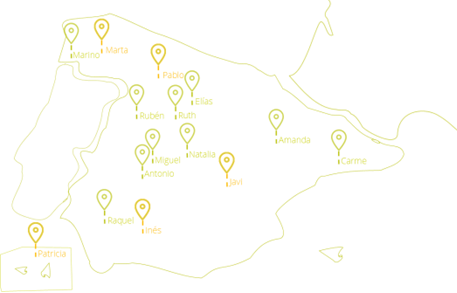
We have a consolidated network of land managers actively working across the entire national territory. This presence allows us to act quickly, gain first-hand knowledge of social dynamics, and establish effective communication channels with local stakeholders from the project’s earliest stages. Our experience in environmental and social management, combined with our territorial reach, enables us to anticipate risks, optimize engagement strategies, and strengthen the technical proposal for every tender. We do not just support the permitting process; we provide territorial intelligence and real operational capacity on the ground.
Incorporating site visits and social engagement strategies from the earliest stages of development is, today, a standard of excellence for any company aspiring to lead the renewable energy sector. Choosing EHS Techniques means betting on a strategic partner that understands the territory, builds trust, and transforms local knowledge into a competitive advantage for the successful development of renewable energy projects in Spain.
International experience
We have the international experience to continue offering this service to continue offering this service anywhere in the world.
Contact our team of professionals.