
 Español

Castilla-La Mancha Edition
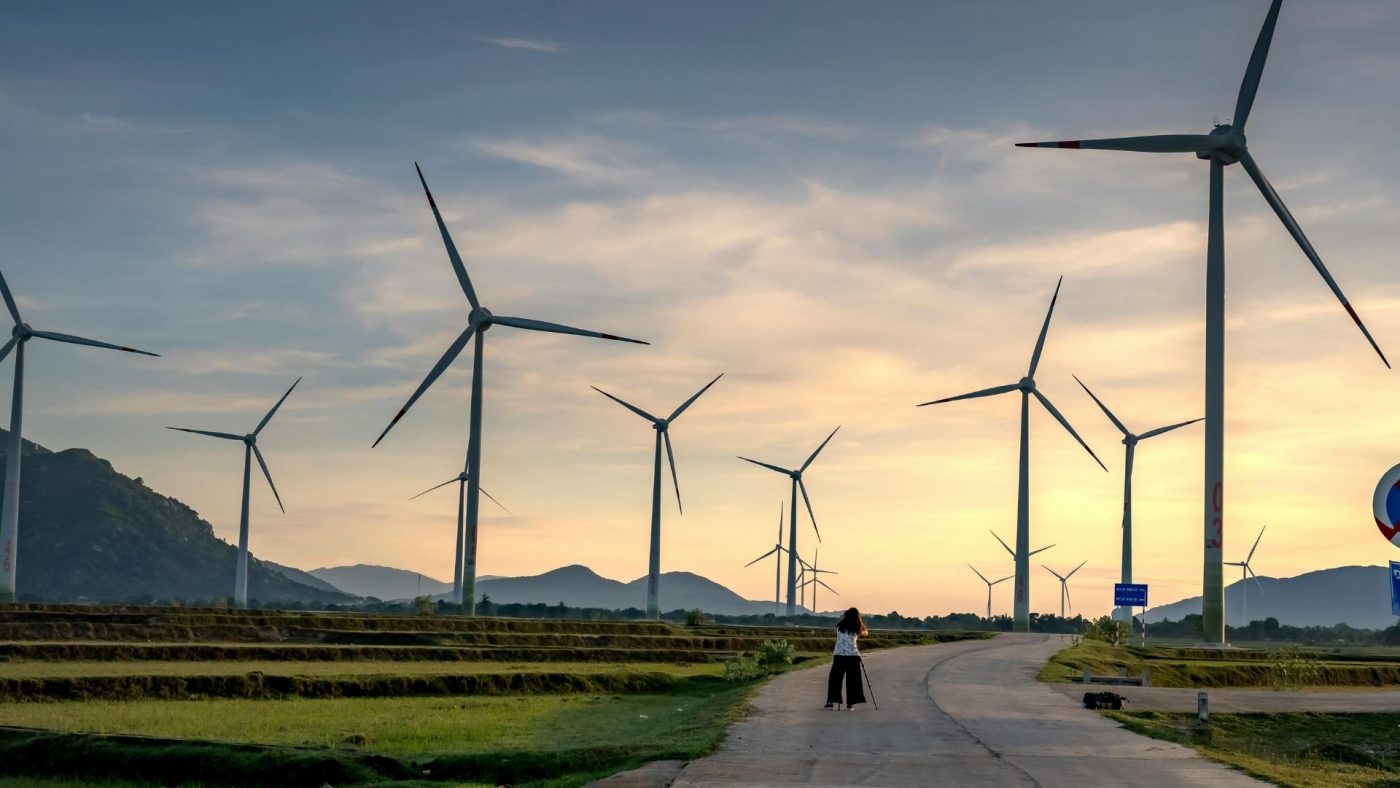
A growing sector. An outstanding debt to the territory.
Castilla-La Mancha is already Spain’s leading autonomous community in solar photovoltaic generation. With nearly 16,000 MW of installed renewable capacity out of a total of 17,866 MW (representing 88% of the regional energy mix), the region has transformed in just a few years from being a mere infrastructure host to becoming the very heart of the Spanish energy transition.
The numbers are compelling: since 2023, renewable energies have mobilized over 1.5 billion euros in private investment and generated more than 6,500 jobs—many of them in rural areas where economic alternatives were scarce or outright non-existent.
And yet, something is amiss.
When a wind farm rises on the horizon of a town with 300 inhabitants, the locals watch trucks drive by for months, endure the dust from the construction, live with the noise of the wind turbines… and then watch as the economic benefits are recorded on the balance sheets of companies headquartered in Madrid, Barcelona, or other cities.
This asymmetry between those who bear the impacts and those who reap the benefits is exactly the problem that Local Integration Plans aim to solve.
What is a Local Integration Plan?
A Local Integration Plan is the instrument through which a renewable energy developer formalizes its commitment to the territory where it will operate.
📌 It is not a public relations document. It is not a list of one-off donations. It is a strategic plan that defines how the project will generate economic, social, and environmental value for the communities within its area of influence throughout its entire lifecycle: development, construction, and operation.
In practice, a well-designed local integration plan answers three specific questions:
- What impacts does the project generate on the territory?
Both the negative ones (land use, visual and landscape impact, noise, habitat fragmentation) and the positive ones (local employment, tax revenue, infrastructure improvements).
- What concrete commitments does the developer undertake to maximize the benefits and minimize the drawbacks? This includes preferential local hiring, training and employment for residents in the area of influence, financing for community projects, citizen participation in decision-making, and compensation mechanisms for the affected municipalities.
- How is compliance measured and verified?
Un plan de integración local sin indicadores de seguimiento no es un plan, es una declaración de intenciones. Los mejores incluyen sistemas de reporte periódico, comités de seguimiento con representación municipal y mecanismos de rendición de cuentas.
A local integration plan without monitoring indicators is not a plan; it is a statement of intent. The best ones include periodic reporting systems, monitoring committees with municipal representation, and accountability mechanisms.
For years, local integration plans depended on the goodwill of developers. Some companies developed ambitious commitments; others limited themselves to meeting the bare minimum required by law. The result was an enormous disparity between projects. That has changed. The Spanish regulatory framework has evolved toward requiring more structured territorial commitments, albeit with varying degrees of intensity depending on the autonomous community.
- At the national level, the National Integrated Energy and Climate Plan (PNIEC 2023-2030) explicitly recognizes that renewable generation must contribute to the socioeconomic development of rural areas and act as a driver for territorial cohesion. The PRTR, for its part, links recovery funds to a vision of the energy transition that includes municipalities with fewer than 5,000 inhabitants and combats depopulation.
- The regional landscape: Catalonia was a pioneer in regulating local participation through Decree-Law 16/2019 and its subsequent development, requiring developers to offer a participation stake to town councils and local residents before obtaining operation authorization. Galicia incorporated a wind energy tax into its Wind Energy Law, which redistributes revenue to municipalities with installed wind farms. Aragon, Extremadura, and the Valencian Community have also advanced in regulatory frameworks that make local benefit a condition—not an option—for processing projects.os.
Castilla-La Mancha: renewable powerhouse, social challenge
The situation in Castilla-La Mancha is peculiar. The region leads the Spanish energy transition in terms of installed capacity, but it does not yet have specific regulations that systematize Local Integration Plans with the same enforcement power as other autonomous communities.
This does not mean that commitments do not exist. The Regional Ministry of Sustainable Development has promoted public-private partnership protocols that include compensatory and land stewardship measures, and the regional government explicitly values—and increasingly demands in practice—that projects generate a positive impact in the rural areas where they are located.
This type of agreement—territorially tailored, with measurable commitments and institutional monitoring—is exactly what Local Integration Plans should systematize for all projects, not just for the most high-profile ones.
In this context, the regional government has announced new funding lines for energy communities totaling 10.6 million euros and the creation in 2026 of a fast-track administrative unit to reduce bureaucracy in this area. These are signs of an energy policy that is gradually incorporating—albeit still incompletely—the social and local dimension that large-scale renewable energy projects require.
What an effective Local Integration Plan must contain
At EHS Techniques, after years of supporting developers and administrations in the social management of renewable projects in Castilla-La Mancha, we have identified the elements that distinguish a plan that works from one that simply exists on paper.
- Rigorous territorial assessment. Before designing measures, it is essential to understand the territory: the local economic structure, existing employment, the stakeholder and community landscape, demographic profile, cultural sensitivities, and institutional capacities of the municipalities within the area of influence. Without this assessment, the proposed measures tend to be generic and ineffective.
- Local hiring and employment.
It is not enough to declare the intent to hire locally. The Territorial Integration Plan must set specific percentages, define what is meant by “local” (geographic radius, census registration, companies based in the municipality…), and establish mechanisms to ensure that this preference is also met by subcontractors. - Genuine stakeholder engagement.
Local residents must have a voice before decisions are made, not after. A engagement process that begins when the project is already designed is not engagement: it is communication. The most advanced Local Integration Plans incorporate consultation phases during the development stage, giving municipalities a real capacity to influence the project design. - Direct economic compensation to municipalities.
Tax revenues via IBI and IAE are necessary but insufficient. Several projects in Castilla-La Mancha have begun to incorporate local development funds managed by the city councils themselves, providing them with the autonomy to allocate these resources to the priorities they identify.
- Energy communities as a distribution instrument.
Castilla-La Mancha already has well-established experiences, such as the energy communities of Abenójar (664 members) and Cervera del Llano (52 members), which were recognized at the 2025 World Environment Day awards. Plans can incorporate concrete commitments from the developer to provide technical and financial assistance for the creation of energy communities in the municipalities within the area of influence. - Monitoring and accountability.
A monitoring committee with representation from city councils, local communities, and the developer—featuring regular meetings and access to compliance reports—is what makes the difference between a real commitment and a forgotten promise.
The role of specialized social consultancy
Renewable energy projects are, by nature, territorial projects. They impact local communities, alter landscapes to which people share deep identity bonds, and generate tensions between different visions of rural development.
Managing this complexity requires skills that go beyond technical and environmental expertise. It requires understanding the social fabric of the territory, knowing how to listen (not just inform), building trust patiently and honestly, and designing engagement mechanisms that work for mayors of municipalities with 200 residents, who have neither the resources nor the time for complicated processes.
En EHS Techniques trabajamos exactamente en eso: ayudamos a los promotores a diseñar e implementar Planes de Integración Local que sean herramientas reales de desarrollo territorial, y acompañamos a las administraciones locales para que puedan negociar desde una posición informada y con capacidad de exigir compromisos concretos.
Our conclusion: the energy transition must also be a social transition.
Castilla-La Mancha already produces renewable energy to cover more than double its own needs. It is an exporting region of clean electricity for the rest of Spain. This is a massive collective achievement.
But if the municipalities hosting the solar and wind farms do not see their services improve, if young people keep leaving, and if farmers feel that their grandfathers’ land is only generating profits for distant shareholders, then the energy transition will have been incomplete.
Los Planes de Integración Local no son una carga burocrática. Son la forma de hacer que la transición energética sea también una transición social justa. Y en Castilla-La Mancha, con el volumen de proyectos que se están tramitando y ejecutando, hacerlos bien no es una opción: es una necesidad.
Are you developing a renewable energy project in Castilla-La Mancha and want to ensure its social viability? At EHS Techniques, we help you design Local Integration Plans that transform territorial impact into shared strategic value.
Let’s talk about your project—contact us today.