
 Español


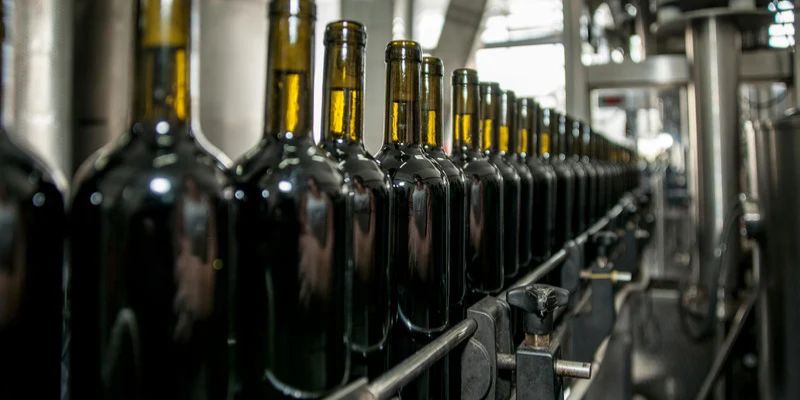
The agri-food sector is increasingly exposed to environmental requirements from customers, distribution, public administrations, financial entities, and consumers. Companies no longer only have to comply with applicable environmental regulations, but also clearly demonstrate how they manage their impacts: energy and water consumption, greenhouse gas emissions, waste, packaging, origin of raw materials, or supply chain sustainability.
In this context, environmental certifications can be a useful tool to organize internal management, improve environmental performance, respond to customer requests, or differentiate a product in the market.
The following is a summary of some of the most relevant certifications and schemes for the sector:
| Certification or scheme | Type | What is it for? | Which agri-food companies might be interested? |
| ISO 14001 | Environmental management system | It allows the implementation of a system to identify, control, and improve the company’s environmental aspects. | Food, canning, dairy, and meat industries, wineries, warehouses, distribution, and companies with multiple production sites. |
| EMAS | European Eco-Management and Audit Scheme | It is a voluntary European Union scheme that recognizes organizations with an implemented environmental management system and a verified environmental statement. | Companies that want to demonstrate an advanced environmental commitment and publish verified environmental information. |
| ISO 50001 | Energy management system | It helps manage and improve the organization’s energy performance. It is useful for reducing consumption, costs, and energy-related emissions. | Companies with significant consumption of electricity, gas, steam, industrial cooling, cold storage rooms, ovens, dryers, or pumping systems. |
| ISO 14064-1 | Corporate carbon footprint / GHG inventory | It establishes criteria for quantifying and reporting greenhouse gas emissions and removals at the organizational level. It can be externally verified. | Companies that need to calculate their corporate carbon footprint, respond to customers, prepare sustainability reports, or develop reduction plans. |
| MITECO carbon footprint registry | Official registry for footprint, reduction, and offsetting | It allows the registration of the organization’s carbon footprint, the reduction plan, and, where applicable, offsets or carbon removal projects. | Companies that want to publicly communicate their footprint calculation and reduction commitment through an official registry. |
| ISO 14067 | Product carbon footprint | It allows for the quantification and reporting of the carbon footprint of a specific product, following a life cycle approach. | Dairy products, preserves, wine, oil, coffee, meat, fish, ready meals, beverages, ingredients, or private label products. |
| DAP / EPD — Declaración Ambiental de Producto | Environmental product communication | It communicates the environmental performance of a product in a verified manner, typically based on a life cycle assessment. It is not limited to climate change. | Agri-food products under commercial pressure, exported products, packaging, auxiliary materials, or products seeking environmental differentiation. |
| Sustainable Wineries for Climate Protection — SWfCP | Sector-specific certification for wineries | It is a specific scheme for sustainable wineries, promoted by the Spanish Wine Federation. It assesses environmental performance and other sustainability aspects. | Galician wineries, denominations of origin, wine cooperatives, and wine-producing companies. |
| ISCC PLUS | Circular, recycled, or bio-based materials | It is a voluntary certification scheme linked to the circular economy and bioeconomy. It can be applied to bio-based, recycled, and circular materials, packaging, food, and feed. | Companies working with plastic packaging, recycled materials, bio-based raw materials, ingredients, or international supply chains. |
How to choose the most suitable certification?
The choice depends on the type of company, the target market, and the goal to be achieved.
A company looking to organize its internal environmental management can start with ISO 14001 or EMAS. If its main impact lies in energy consumption, implementing ISO 50001 may make sense. If it receives requests from customers regarding emissions, perhaps the most useful approach would be to calculate and verify the corporate carbon footprint in accordance with ISO 14064-1 or prepare for registration in the MITECO carbon footprint registry.
If the pressure comes from a specific product, it may be more appropriate to calculate the product carbon footprint in accordance with ISO 14067 or to develop an Environmental Product Declaration. And for wineries, Sustainable Wineries for Climate Protection can be a particularly interesting sector-specific option.
At EHS Techniques, we support agri-food companies in carbon footprint calculations, reduction plans, life cycle assessments, environmental product declarations, sustainability reports, and preparation for environmental certifications.
You can contact us here.